Specialties
>
Specialty Compounding

Specialty Compounding

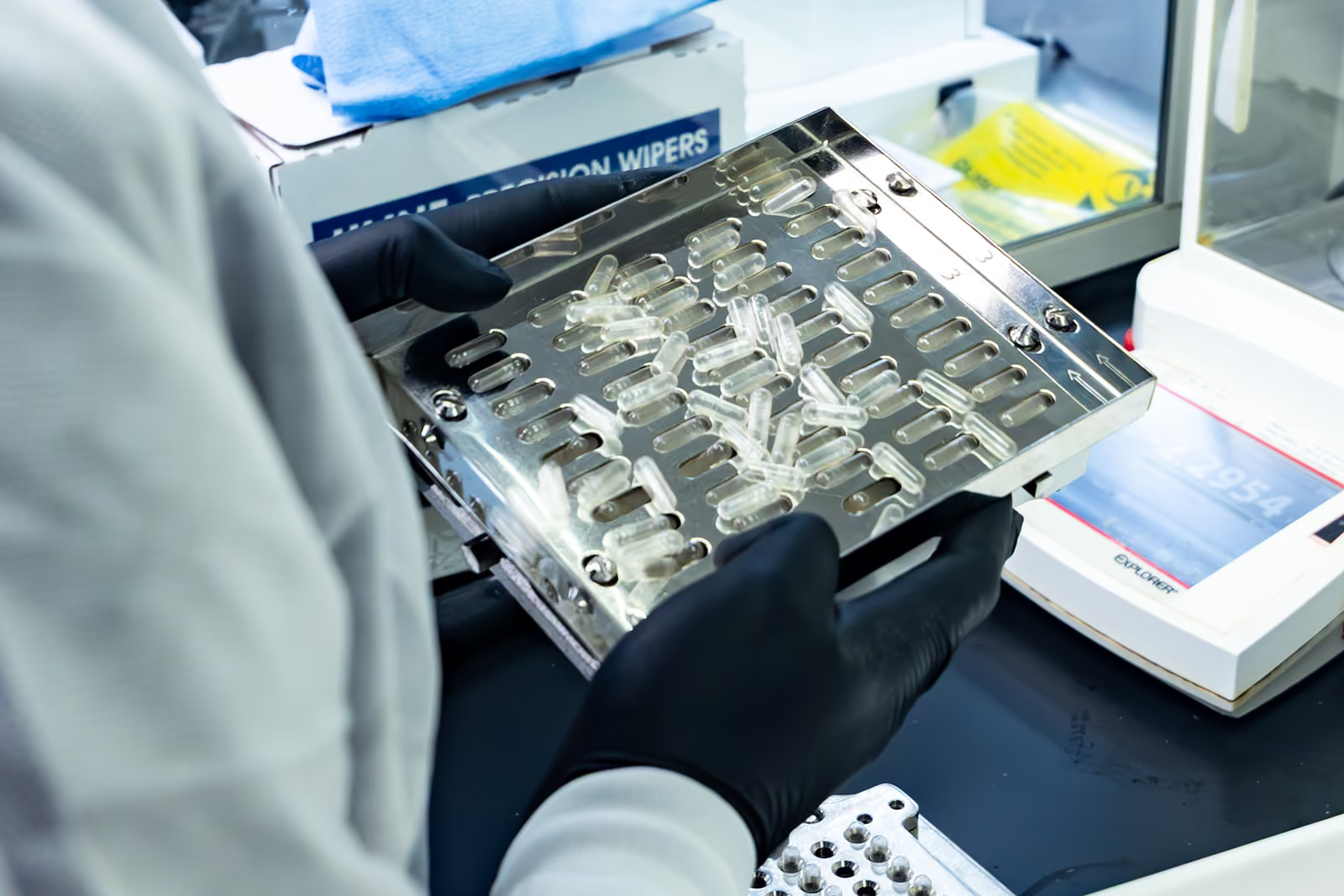
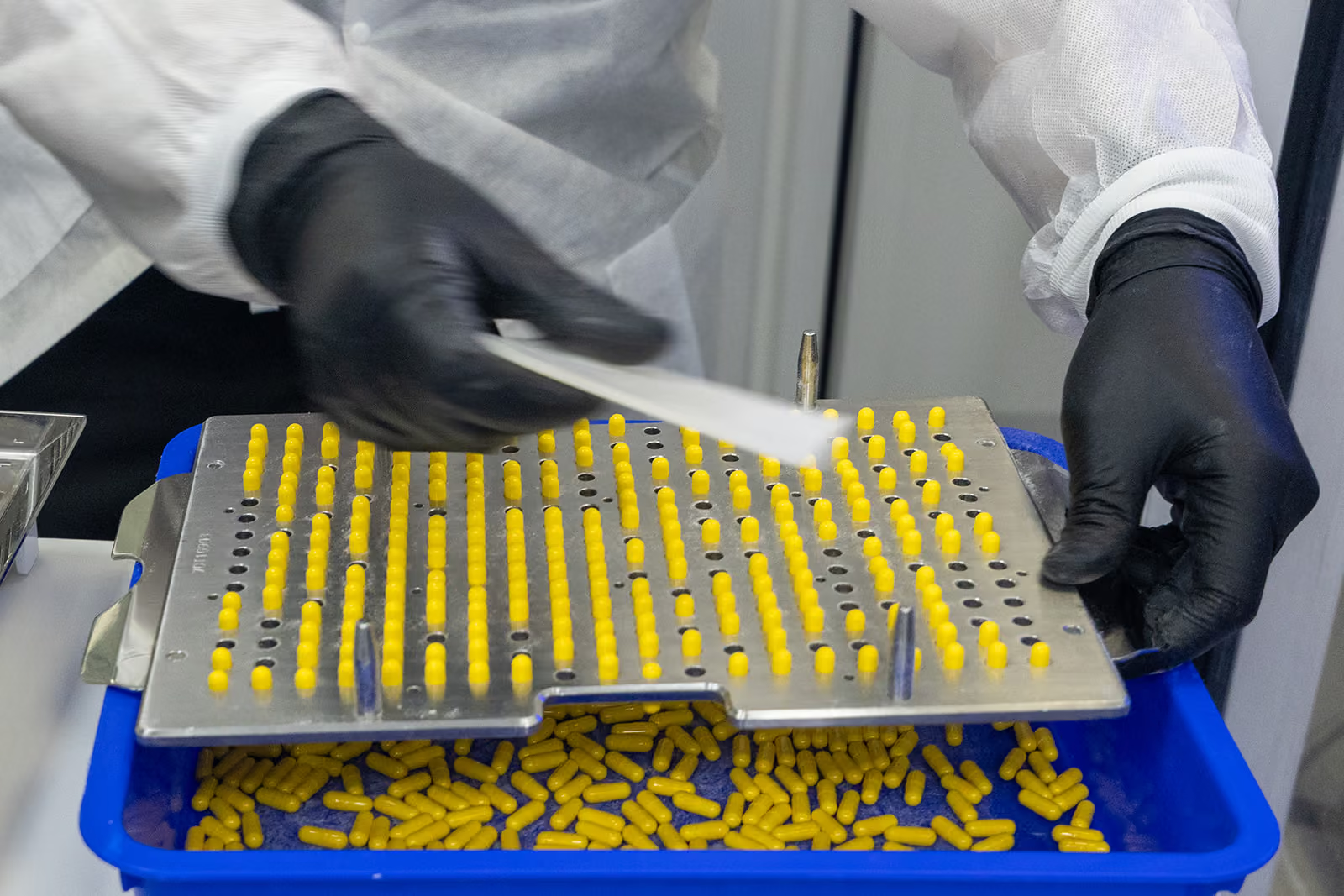
Some of the most useful medications aren't on a pharmacy shelf at all. When your provider prescribes something specialized — Low Dose Naltrexone (LDN), a compounded eye drop, a non-opioid pain formula made for you — we prepare it from your individual prescription, exactly the way they wrote it, one patient at a time. Made for you, not pulled off a shelf, with the same care we've brought to it since we were founded in 2007.
PCAB & ACHC Accredited
PCCA & APC member
LegitScript Certified
LDN Research Trust listed pharmacy
Licensed in 7 states
PCAB & ACHC Accredited
PCCA & APC member
LegitScript Certified
LDN Research Trust listed pharmacy
Licensed in 7 states
PCAB & ACHC Accredited
PCCA & APC member
LegitScript Certified
LDN Research Trust listed pharmacy
Licensed in 7 states
Why The Chemist Shop

Why patients and providers choose The Chemist Shop

When a medication is made for one person, the pharmacy behind it matters. Here's what patients and providers count on us for, and all of it is verifiable.

Find a Provider
One pharmacy, many specialties
When your care crosses several specialized needs at once — a GI or autoimmune compound, an eye drop, a pain formula — you don't want to chase three pharmacies; we prepare them all, each one made just for you from your provider's prescription.
Prepared per your provider's formulation
You won't find these on a shelf — each is a custom preparation your provider chooses, a specific combination, a particular strength, a base they specify, compounded to their exact order.
Standards you can verify
When it's something specialized going in or on your body, you deserve to know who's preparing it — so we hold ourselves to standards you can check for yourself: accredited by PCAB and ACHC, certified by LegitScript, a PCCA and APC member, and listed with the LDN Research Trust. All independently verifiable.
Sterile and non-sterile, done right
Your prescription might be a cream, a capsule, or a sterile eye drop — so we compound both ways, with sterile preparations made to USP <797> standards (and USP <800> where a preparation is hazardous).
Why The Chemist Shop

Why patients and providers choose The Chemist Shop
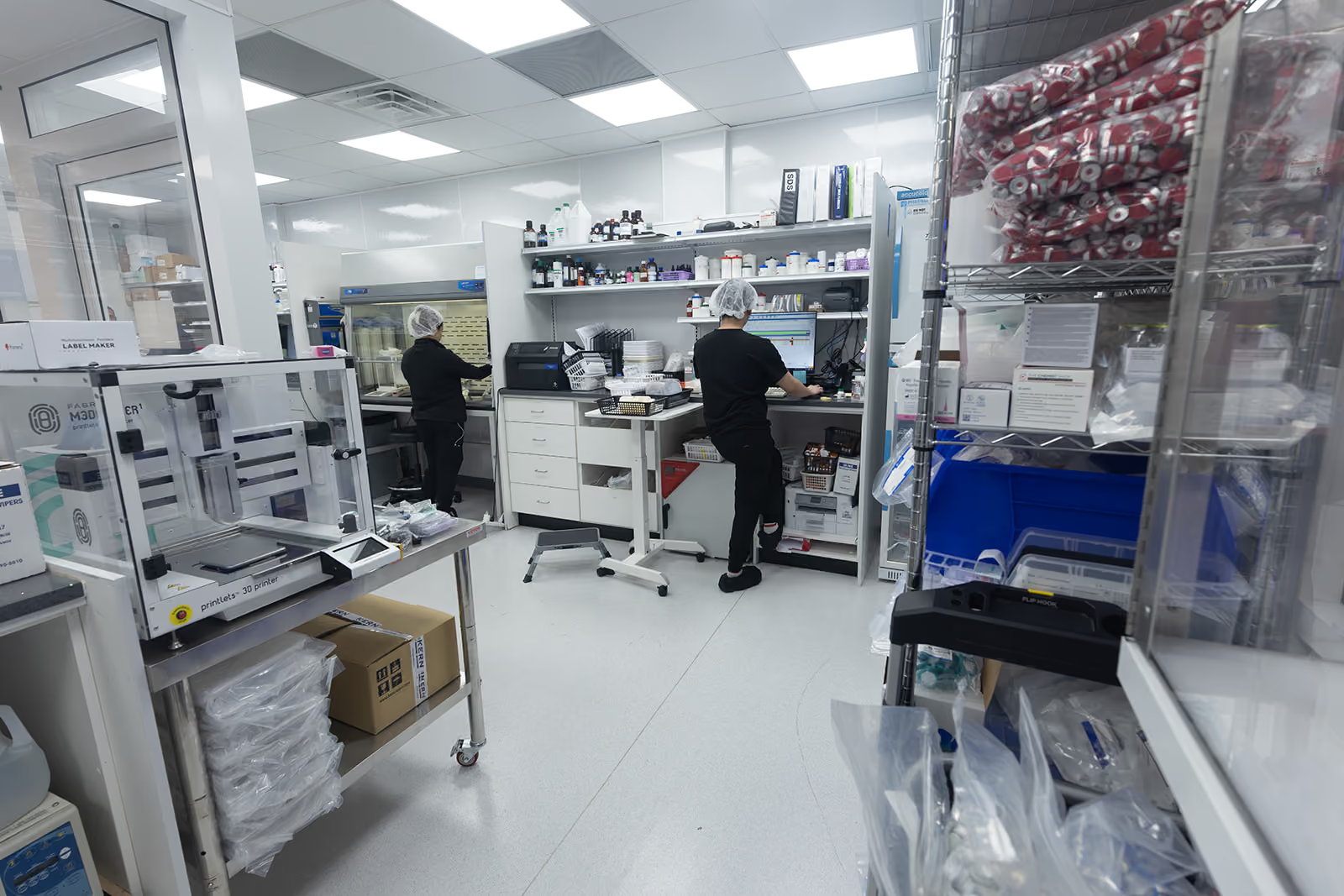
When a medication is made for one person, the pharmacy behind it matters. Here's what patients and providers count on us for, and all of it is verifiable.

Find a Provider
One pharmacy, many specialties
When your care crosses several specialized needs at once — a GI or autoimmune compound, an eye drop, a pain formula — you don't want to chase three pharmacies; we prepare them all, each one made just for you from your provider's prescription.
Prepared per your provider's formulation
You won't find these on a shelf — each is a custom preparation your provider chooses, a specific combination, a particular strength, a base they specify, compounded to their exact order.
Standards you can verify
When it's something specialized going in or on your body, you deserve to know who's preparing it — so we hold ourselves to standards you can check for yourself: accredited by PCAB and ACHC, certified by LegitScript, a PCCA and APC member, and listed with the LDN Research Trust. All independently verifiable.
Sterile and non-sterile, done right
Your prescription might be a cream, a capsule, or a sterile eye drop — so we compound both ways, with sterile preparations made to USP <797> standards (and USP <800> where a preparation is hazardous).
What to Expect

How to get started

Find your provider

Tell us where you are, and we'll connect you with a partnered provider near you.

Your provider prescribes

They decide whether a compounded option is right for you and, if so, send the prescription to us through their secure provider portal — including the strength, form, and formula they want.

We compound and ship

We prepare your medication to that prescription and ship it straight to you, anywhere we're licensed. Have a question about it? Our pharmacists — the people who actually prepared it — are here for you and your provider.

Prescribing across GI, autoimmune, ophthalmology, or pain?

You carry the clinical relationship; we carry the prep. Whether you're prescribing LDN for a complex autoimmune or GI picture, a compounded or autologous serum eye drop, or a non-opioid topical for chronic pain, you send the prescription through your provider portal — we compound it to your exact order, sterile work to USP <797>/<800> standards where it applies, and ship it straight to your patient, anywhere we're licensed. The model is simple: we educate your patients, you write the script, we compound and ship. And our pharmacists are here for both of you — whenever you or your patient has a question about a medication, a real person who knows it picks up. (We compound ketamine only for valid, patient-specific prescriptions — never office stock. We do not compound opioids.)

Become a Partner Provider

Compounded Medications FAQs

What is a specialty compounding pharmacy?

A specialty compounding pharmacy prepares custom medications for one specific patient — you — from your provider's prescription, instead of manufacturing them in advance for general sale. It's where providers turn when an off-the-shelf product doesn't fit, across areas like GI, autoimmune care, eye care, and pain. Your provider decides what's right for you; we're the compounding pharmacy (a 503A pharmacy) that prepares it.

Where can I get compounded Low Dose Naltrexone (LDN)?

From a compounding pharmacy, with a prescription. Low Dose Naltrexone (LDN) is prepared at a low, patient-specific dose by a compounding pharmacy from your provider's prescription — it isn't sold over the counter. The Chemist Shop compounds LDN and is listed with the LDN Research Trust. Use our directory to find a provider near you who prescribes it.

Who can prescribe Low Dose Naltrexone?

Any licensed prescriber — an MD, DO, nurse practitioner, or physician assistant — can prescribe Low Dose Naltrexone when they judge it appropriate for you. It's often prescribed within functional, autoimmune, GI, or integrative practices. Your provider decides; we're the compounding pharmacy that prepares it.

What conditions is compounded LDN prescribed for?

Providers prescribe compounded Low Dose Naltrexone in a range of clinical scenarios — including autoimmune conditions, certain GI conditions such as Crohn's disease and IBS, and some metabolic situations — based on their clinical judgment. These are off-label uses (uses beyond a product's original FDA-approved label); LDN is not an FDA-approved product for them and is not a cure, and your provider decides whether it's appropriate for you. We prepare it to their prescription.

Is compounded LDN used for autoimmune or thyroid conditions like Hashimoto's?

Only your provider can decide. Some clinicians prescribe compounded Low Dose Naltrexone in autoimmune and thyroid-related scenarios — including Hashimoto's, lupus, and psoriasis — when they judge it appropriate. It's an off-label use, LDN is not an FDA-approved product for these uses, and it is not a cure — never something to start on your own. For hormone-related care, see our BHRT / Women's Health specialty.

What compounded eye drops can be made?

A range your physician can prescribe — preservative-free preparations, anti-inflammatory and antibiotic combinations, low-concentration atropine, cyclosporine, and post-surgical formulations, among others — always per your physician's prescription and prepared to sterile standards. Your eye doctor decides what's right for you; we compound it to their order.

What are autologous serum eye drops, and can you make them?

Autologous serum eye drops are made from a small sample of your own blood serum, compounded into sterile drops under your eye doctor's prescription — used in some ocular-surface cases when standard products aren't enough. They're prepared to sterile standards, per your physician's order. Your eye doctor decides if they're appropriate; ask our team about current availability.

Do you compound ketamine for pain, and what about the FDA warnings?

We do — but only for valid, patient-specific prescriptions written by licensed providers for clinically-appropriate uses, never for office stock. The FDA has issued public warnings about compounded ketamine prescribed outside established clinical protocols. Here, ketamine is strictly prescription-based and overseen by your provider. We do not compound opioids.

Is The Chemist Shop accredited?

Yes. We're accredited by PCAB and ACHC, certified by LegitScript, a PCCA and APC member, and listed with the LDN Research Trust. Our ACHC accreditation covers sterile compounding to USP <797> standards — which matters for eye-drop preparations — and USP <800> where it applies. All of it is independently verifiable.

Understanding specialty compounding  

GI & autoimmune — where does Low Dose Naltrexone (LDN) fit in?  

This content is for informational purposes only and does not constitute medical advice. Compounded medications are prepared based on a prescription from a licensed healthcare provider. Consult your healthcare provider before starting any new treatment.
If your provider has mentioned LDN, here's the plain version. Low Dose Naltrexone is naltrexone prepared at a much lower dose than the standard product — which is exactly why it has to be compounded for one patient at a time, from a prescription. Always off-label and never a cure, compounded LDN is something providers may consider — based on your full history — in clinical scenarios that include GI conditions such as Crohn's disease, ulcerative colitis, and IBS; autoimmune and inflammatory conditions including Hashimoto's, lupus, multiple sclerosis, fibromyalgia, and psoriasis; and some metabolic situations. "Off-label" means a use beyond what the original product was FDA-approved for — it is not an FDA-approved product for these uses, and whether it's right for you is a decision only your provider can make with your full history in view. We prepare it to their order; we're listed with the LDN Research Trust as a pharmacy that compounds it. For weight-related LDN, see our Weight Management specialty; for thyroid and women's-health autoimmune contexts, see BHRT / Women's Health.

Ophthalmology — compounded & autologous serum eye drops, per your physician

This content is for informational purposes only and does not constitute medical advice. Compounded medications are prepared based on a prescription from a licensed healthcare provider. Consult your healthcare provider before starting any new treatment. 

This is delicate, sterile work, and it's prescription-driven from start to finish. Ophthalmologists and optometrists turn to compounding when a commercial eye drop doesn't fit a patient's needs — for dry eye and ocular-surface conditions, glaucoma, post-surgical recovery, and more. The preparations a provider may prescribe include autologous serum eye drops (made from a small sample of your own blood serum), compounded cyclosporine, low-concentration atropine for managing the progression of nearsightedness (myopia) in some children — an off-label use a pediatric eye specialist decides on carefully, drop by drop — combination post-operative drops, and fortified antibiotic drops. Each is compounded per your physician's prescription, and the sterile ones are prepared to USP <797> standards under our ACHC accreditation. Your eye doctor determines what, if anything, is right for your eyes — we prepare exactly what they write.

Pain Management — non-opioid topical & specialty formulations

This content is for informational purposes only and does not constitute medical advice. Compounded medications are prepared based on a prescription from a licensed healthcare provider. Consult your healthcare provider before starting any new treatment.
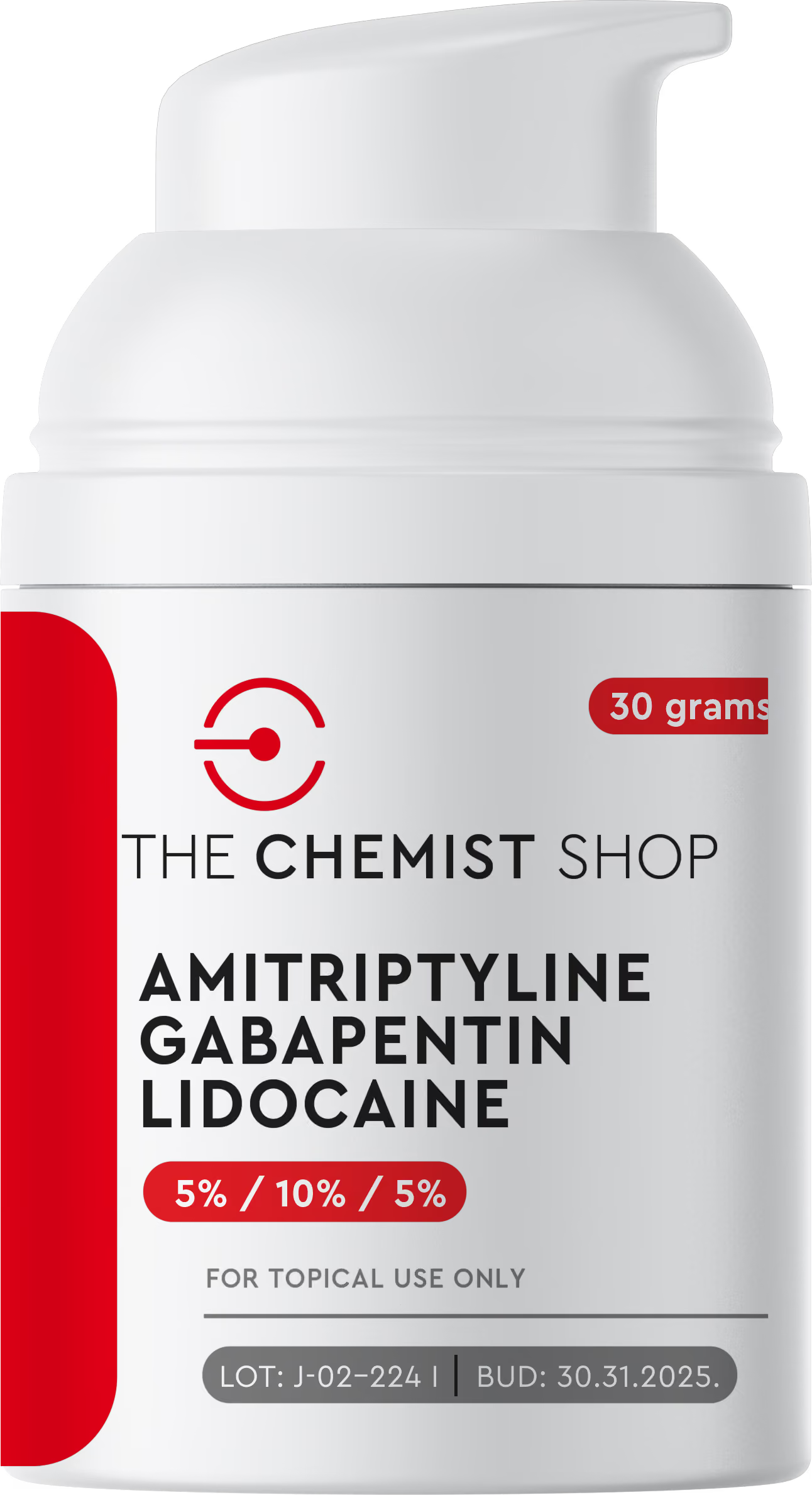
If your provider has mentioned a compounded option for chronic pain, here's the plain version. For patients and providers who'd rather avoid or reduce systemic medication, providers may prescribe compounded topical formulations — such as amitriptyline/gabapentin/lidocaine combinations, or diltiazem- and nifedipine-based rectal creams that sit at the border of GI and pain care — when they judge a topical approach appropriate for a patient's situation. Each is prepared per your provider's formulation; we make no claim about how well any formula works — that's between you and your prescriber, and any pain relief is as prescribed by your provider. Compounded ketamine for pain is prescription-only, and the FDA has cautioned against its use outside established clinical protocols; we acknowledge that context directly. Where a provider determines it is appropriate, we compound ketamine only against a valid, patient-specific prescription — never office stock — with the clinical decision and oversight resting with your provider. The Chemist Shop does not compound opioids. Your provider and your prescription label are the authoritative sources for how to use any medication — never adjust based on general information. When you're ready, use our Find a Provider page to be connected with a partnered provider near you.

Medicine made for the person taking it

Partner with us, or find a provider who prescribes through The Chemist Shop.

Compliance and Terms

This content is for informational purposes only and does not constitute medical advice. Compounded medications are prepared based on a prescription from a licensed healthcare provider — they are not FDA-approved and have not been reviewed by the FDA for safety, effectiveness, or quality. Consult your healthcare provider before starting any new treatment.