Specialties
>
Dermatology

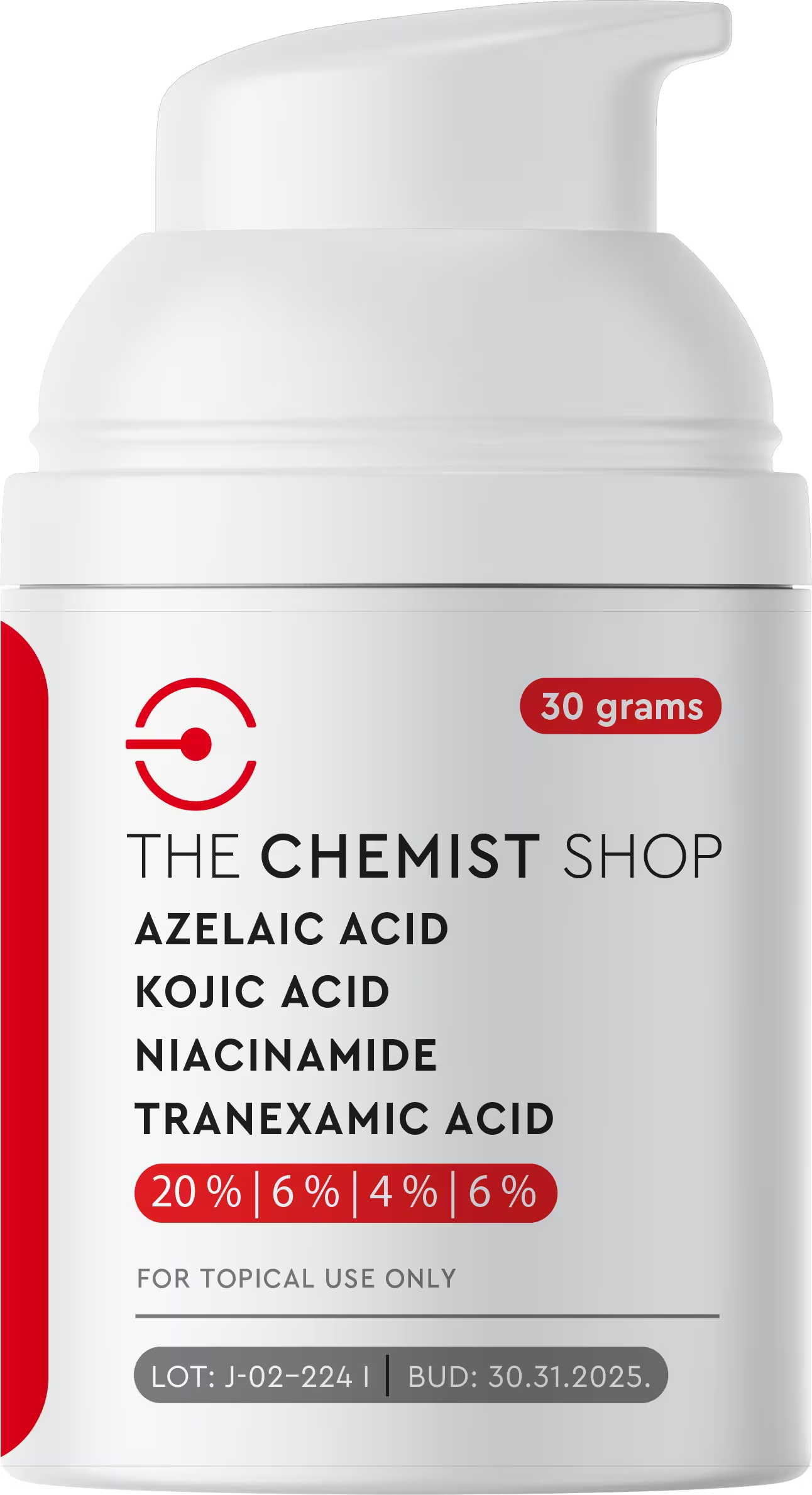
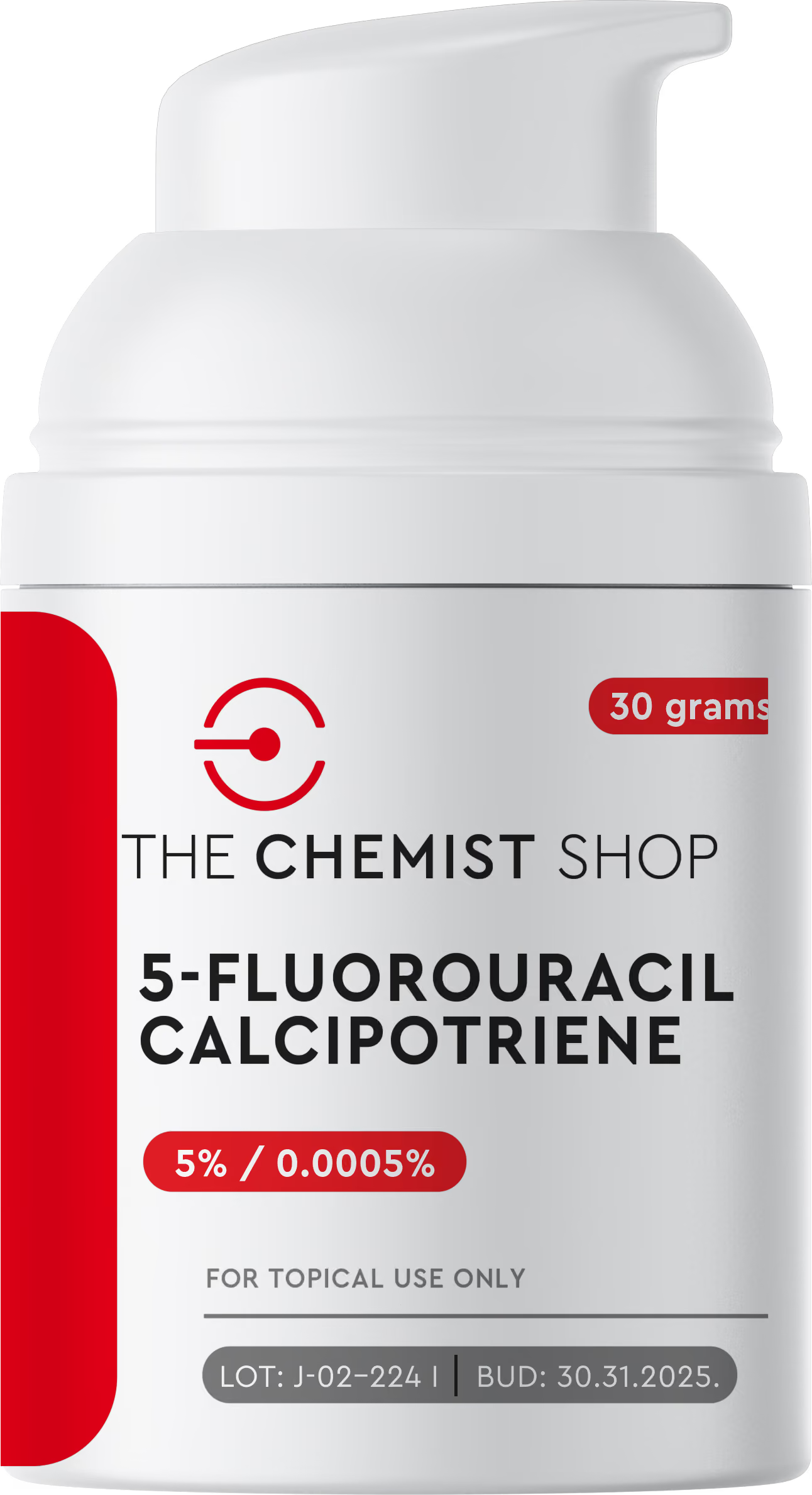
Custom Dermatology Compounding

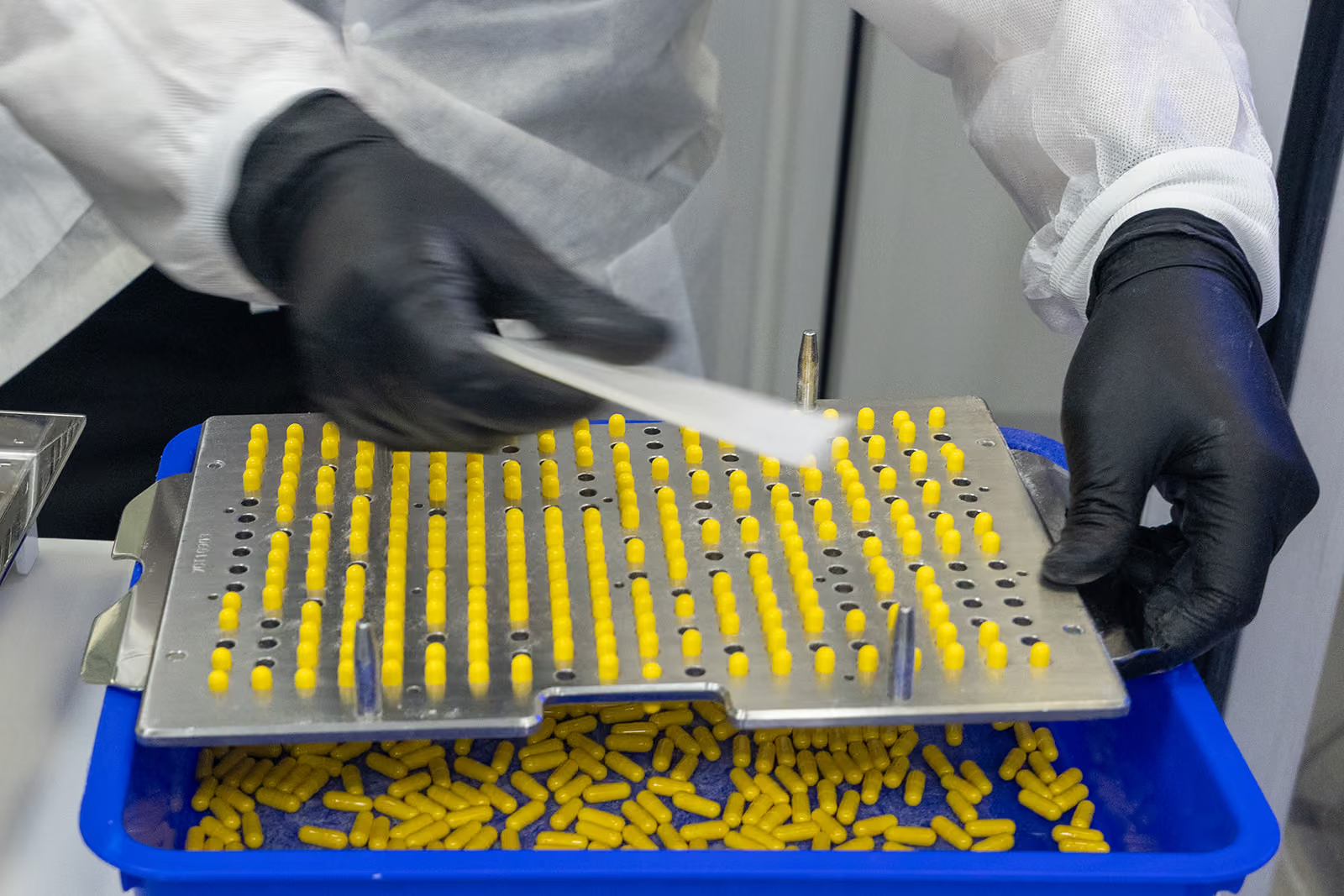
If your provider prescribes a custom topical — a specific strength, a combination formula, a child-friendly dose — we prepare it from your prescription and compound it to their exact specification. Same careful hands, the same way, since we were founded in 2007.

PCAB & ACHC Accredited
PCCA & APC member
LegitScript Certified
LDN Research Trust listed pharmacy
Licensed in 7 states
PCAB & ACHC Accredited
PCCA & APC member
LegitScript Certified
LDN Research Trust listed pharmacy
Licensed in 7 states
PCAB & ACHC Accredited
PCCA & APC member
LegitScript Certified
LDN Research Trust listed pharmacy
Licensed in 7 states
What to Expect

How to get started

Find your provider

Tell us where you are, and we'll connect you with a partnered provider near you.

Your provider decides

They'll evaluate whether a compounded option is right for you and, if so, write your prescription — including the strength, combination, and base they want.

We prepare it

We compound your medication to that prescription and send it out — made for you, never sold off a shelf.

What we offer

Why patients and providers choose The Chemist Shop

When a medication is made for one person, the pharmacy behind it matters. Here's what patients and providers count on us for, and all of it is verifiable.

Find a Provider
Standards you can verify
We hold ourselves to verifiable standards — accredited by PCAB and ACHC, certified by LegitScript, a member of PCCA and the Alliance for Pharmacy Compounding (APC), and listed with the LDN Research Trust.
Made to your provider's formula
Dermatology compounding is custom work — specific strengths, combination formulas, and bases you can't buy off a shelf — prepared non-sterile or sterile as your prescription requires.
Close to home in more places
Licensed across NY, NJ, CT, PA, FL, AZ, and NH, with more states on the way.
Founded in 2007
Every medication we make is patient-specific and prepared to a prescriber's order — and a real person who knows your medication answers the phone.
What we offer

Why patients and providers choose The Chemist Shop
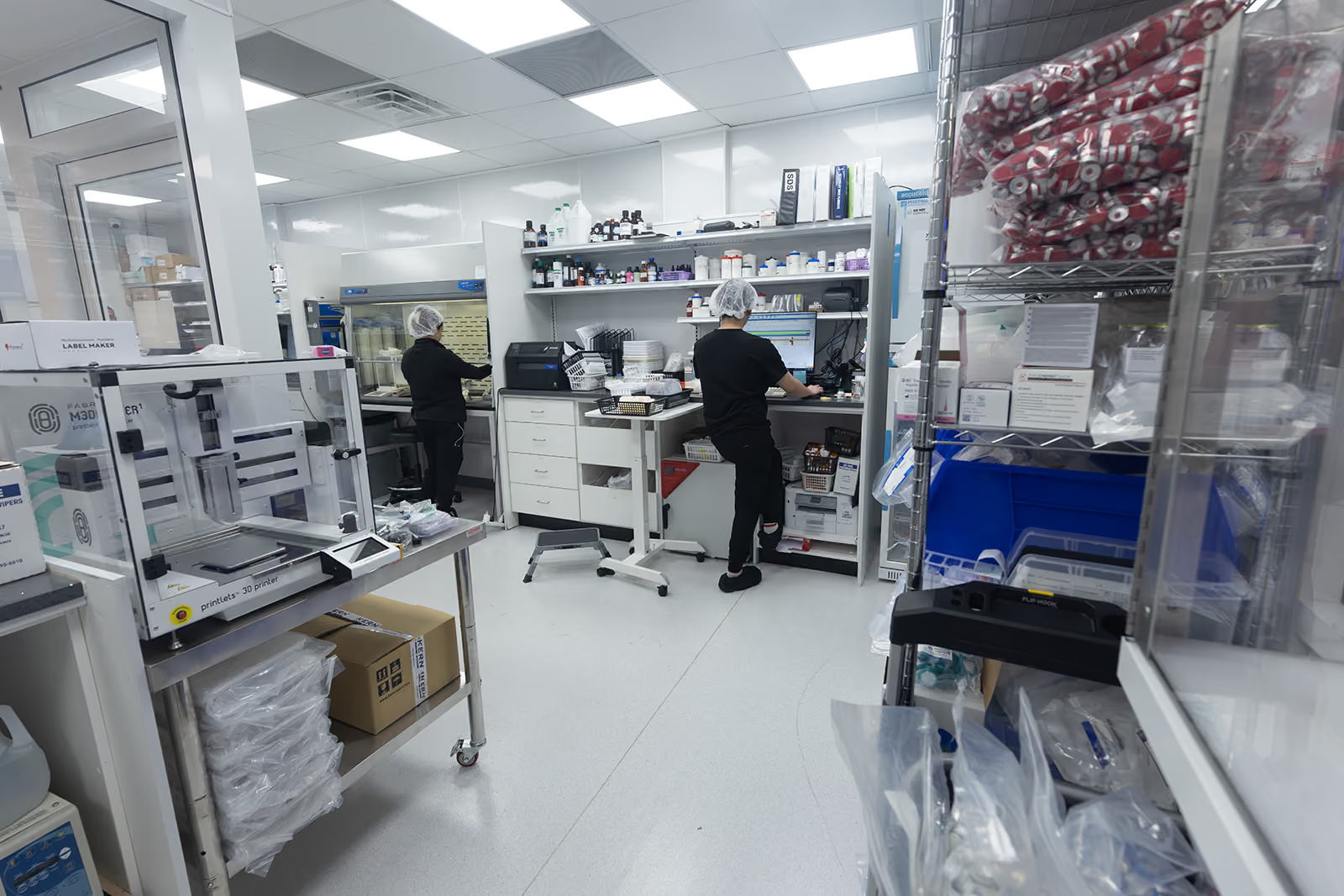
When a medication is made for one person, the pharmacy behind it matters. Here's what patients and providers count on us for, and all of it is verifiable.

Find a Provider
Standards you can verify
We hold ourselves to verifiable standards — accredited by PCAB and ACHC, certified by LegitScript, a member of PCCA and the Alliance for Pharmacy Compounding (APC), and listed with the LDN Research Trust.
Made to your provider's formula
Dermatology compounding is custom work — specific strengths, combination formulas, and bases you can't buy off a shelf — prepared non-sterile or sterile as your prescription requires.
Close to home in more places
Licensed across NY, NJ, CT, PA, FL, AZ, and NH, with more states on the way.
Founded in 2007
Every medication we make is patient-specific and prepared to a prescriber's order — and a real person who knows your medication answers the phone.
Why The Chemist Shop

Prescribing custom dermatology medications?

You formulate; we compound. When you prescribe a custom topical — a specific tretinoin strength, a combination therapy, a pediatric dosage form, an allergen-free base — your patient orders through your dedicated provider portal, and our compounding pharmacists prepare it to your specification and are here for formulation questions. Accredited, LegitScript-certified, and partnered across seven states, with more on the way.

Become a Partner Provider

Dermatology Medication FAQs

What dermatology compounds can be made?

A range of custom topicals your provider can prescribe: custom-strength tretinoin, compounded hydroquinone and combination (Kligman-type) formulas, topical spironolactone, topical finasteride and minoxidil, and pediatric dosage forms. Your provider decides what's right for you; we're the pharmacy that prepares it.

Can my dermatologist customize a formula?

Yes — that's the point of compounding. Your provider specifies the active ingredients, strength, combination, and base, and we prepare it to that order. It's how patients get options that aren't available off the shelf.

How are pediatric formulations handled?

Carefully, and always to your provider's prescription. For children, compounding can mean a gentler strength, a different base, or kid-friendly flavoring to make a medication easier to use. Your child's provider decides what's appropriate and writes the prescription.

Do I need a prescription?

Yes — you'll need one from a licensed provider. We can't prepare a compounded medication without it, and we don't sell these direct to patients.

Is topical spironolactone for acne FDA-approved?

Spironolactone is FDA-approved for other medical uses; its use for hormonal acne is off-label, meaning your provider prescribes it based on their clinical judgment. Compounded topical spironolactone is prepared from your specific prescription under the 503A framework — it isn't an FDA-approved product.

Are compounded dermatology medications FDA-approved?

No. Compounded medications are not FDA-approved and haven't been reviewed by the FDA for safety, effectiveness, or quality. They're prepared for one specific patient from a provider's prescription, rather than manufactured for everyone.

 Is The Chemist Shop accredited?

Yes — and when it's something you're putting on your skin or your child's, that matters. We're accredited by PCAB and ACHC and certified by LegitScript, a PCCA and APC member, and listed with the LDN Research Trust. We compound both non-sterile and sterile preparations. All of it is verifiable.

How do I get started?

Start by finding a partnered provider in our directory. The clinical conversation happens between you and them. Once they send us your prescription — with the strength and formula they want — we prepare it and send it your way.

Understanding compounded dermatology  

What is a dermatology compounding pharmacy?

A dermatology compounding pharmacy prepares custom skin- and hair-care medications   for one specific patient — you — from a provider's prescription, rather than   manufacturing them in advance for general sale. Providers turn to compounding when a   patient needs something a commercial product doesn't offer: a specific strength, a   combination of actives in one formula, a particular base, or a form a child can use.   Compounded medications are not FDA-approved and have not been reviewed by the FDA   for safety, effectiveness, or quality, and they're prepared only against a valid prescription.   The Chemist Shop prepares these medications; your provider decides whether a   compounded option fits your situation.

Why do some dermatology treatments need to be compounded?  

Because skin and hair care is rarely one-size-fits-all. Providers prescribe compounded   dermatology formulas in many areas of care — including acne, melasma and other   pigment concerns, and hair thinning — when an off-the-shelf product won't do: a custom   tretinoin strength, a combination formula such as a Kligman-type cream, a medication in a   base that suits sensitive skin, or a pediatric preparation. Compounding lets your provider   tailor the medication to what they've decided you need, instead of fitting you to a fixed   commercial product. What's right for you — and whether a compounded option is   appropriate at all — is a decision for the provider who knows your history.

How is compounded dermatology regulated and accredited?

Here's how the oversight works. 503A compounding is governed by federal law, overseen   by state boards of pharmacy, and held to United States Pharmacopeia (USP) standards for   how medications are prepared — including USP <795> for non-sterile preparations (most   topical dermatology compounds) and USP <797> for sterile ones. Compounded   medications are regulated differently from manufactured, FDA-approved drugs: they're   prepared for individual patients rather than mass-produced and reviewed through the   FDA approval process — and they are not FDA-approved or reviewed by the FDA for safety,   effectiveness, or quality. Accreditation is an independent quality signal on top of those   requirements — and we hold the ones that matter here: PCAB and ACHC accredited,   LegitScript certified, a PCCA and APC member, and listed with the LDN Research Trust, all   of it verifiable.

What about off-label dermatology compounds, like topical   spironolactone?  

It's a fair question, and worth understanding. Some medications providers prescribe in   dermatology are used "off-label" — meaning the medication is FDA-approved for one use,   and a provider prescribes it for another based on their clinical judgment and the medical   evidence. Topical spironolactone for hormonal acne is a common example: spironolactone   is FDA-approved for other medical uses, and its use for acne is off-label. Off-label   prescribing is legal and routine in medicine, and the decision always belongs to your   provider. When they prescribe a compounded off-label preparation, we prepare it from   that specific prescription — it isn't an FDA-approved product, and we'd never dispense it   without a valid prescription.

What should I talk about with your dermatologist or provider?  

Because a compounded medication is made specifically for you, the most important   conversation is with the provider who prescribes it. Good questions to bring: whether a   compounded option is right for your skin or hair concern, which strength and combination   are being prescribed and why, what to expect, and how follow-up will work. Your provider   and your prescription label are the authoritative sources for how to use your medication   — never adjust based on general information. Our compounding pharmacists can answer   questions about the preparations we make and support you alongside your provider's   care. When you're ready, use our directory to find a partnered provider near you.

Medicine made for the person taking it

Partner with us, or find a provider who prescribes through The Chemist Shop.

Compliance and Terms

This content is for informational purposes only and does not constitute medical advice. Compounded medications are prepared based on a prescription from a licensed healthcare provider — they are not FDA-approved and have not been reviewed by the FDA for safety, effectiveness, or quality. Consult your healthcare provider before starting any new treatment.